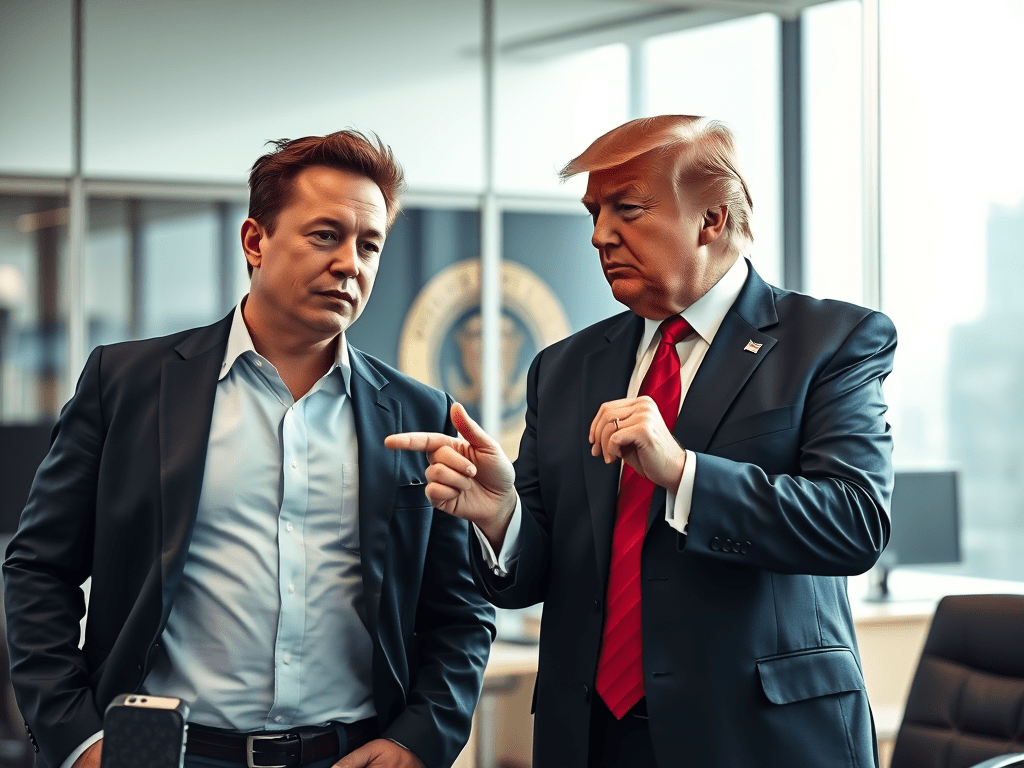
The Bold Appointment: Elon Musk Joins Trump’s Efficiency Crusade
In a surprising yet headline-grabbing move, President-elect Donald Trump has chosen tech mogul Elon Musk to lead a groundbreaking initiative aimed at overhauling the federal government’s operations. Joining forces with biotech investor Vivek Ramaswamy, Musk is set to spearhead the newly proposed “Department of Government Efficiency” (Doge). This appointment signals a dramatic shift in how the administration plans to tackle longstanding issues of bureaucracy and inefficiency within the federal structure.
The Department of Government Efficiency isn’t slated to become an official government agency; instead, it will function as an advisory body, providing expert guidance and strategic recommendations from outside the traditional governmental framework. Trump has likened the formation of Doge to the famed Manhattan Project of World War II, emphasizing the ambitious and high-stakes nature of this initiative. The goal is nothing short of transformative: dismantling bureaucratic red tape, slashing excessive regulations, cutting wasteful expenditures, and restructuring federal agencies to foster a more agile and cost-effective government. 🏛️✨
Mission Possible: Objectives and Strategies of Doge
At the core of Doge’s mission is the staggering $6.5 trillion in annual government spending. Musk and Ramaswamy will collaborate closely with the White House and the Office of Management & Budget to identify areas rife with waste and fraud. Their mandate is clear: deliver a comprehensive plan to reduce federal spending, eliminate unnecessary regulations, and streamline operations. All of this is expected to be accomplished by July 4, 2026, symbolizing a fresh start coinciding with the United States’ 250th anniversary of independence.
One of the most intriguing aspects of Doge is its unconventional approach. By positioning themselves outside the traditional government hierarchy, Musk and Ramaswamy are expected to bring an entrepreneurial spirit to governmental reform. This setup aims to bypass the often slow-moving legislative processes and implement changes more swiftly and efficiently. Musk’s track record in the private sector—where he has successfully managed companies like Tesla and SpaceX—suggests that his leadership could lead to significant and rapid advancements in government efficiency.
To visualize the scope of their mission, consider the following table:
| Objective | Target Metric | Deadline |
|---|---|---|
| Reduce Federal Spending | $6.5 Trillion Annual Budget | July 4, 2026 |
| Slash Excess Regulations | Eliminate Red Tape | July 4, 2026 |
| Cut Wasteful Expenditures | Identify & Remove Waste | July 4, 2026 |
| Restructure Federal Agencies | Streamline Operations | July 4, 2026 |
This structured approach not only sets clear targets but also provides a timeline that underscores the urgency and importance of the initiative. By setting a definitive end date, Trump ensures that the efforts of Doge remain focused and results-driven, minimizing the risk of protracted debates and delays that often plague governmental reforms.
Dynamic Duo: Elon Musk and Vivek Ramaswamy’s Synergistic Partnership
Elon Musk is no stranger to pushing the boundaries of innovation and efficiency. As the CEO of Tesla and SpaceX, Musk has consistently demonstrated his ability to lead large, complex organizations towards ambitious goals. His approach to business—marked by relentless cost-cutting, groundbreaking technological advancements, and a keen eye for operational efficiency—makes him an apt choice for leading Doge. Moreover, Musk’s public stance against what he perceives as government overregulation aligns perfectly with the objectives of this new department.
Partnering with Musk is Vivek Ramaswamy, a biotech investor and former Republican presidential candidate who has recently emerged as one of Trump’s staunchest allies. Ramaswamy brings a wealth of experience in both the private sector and political campaigning, adding a complementary skill set to the partnership. Together, Musk and Ramaswamy are expected to foster a collaborative environment that blends technological prowess with strategic political insight.
Their combined efforts aim to achieve what many consider a herculean task: reducing the federal budget by at least $2 trillion. While Musk has not provided detailed plans on how these cuts will be realized, his history suggests a willingness to make bold and unconventional decisions to achieve efficiency. Similarly, Ramaswamy has pledged to drastically reduce the federal workforce and shut down select agencies, indicating a willingness to undertake significant structural changes.
The synergy between Musk and Ramaswamy could be the key to Doge’s success. Musk’s innovative mindset paired with Ramaswamy’s strategic political acumen creates a formidable team capable of navigating the complexities of federal reform. Their partnership symbolizes a merging of Silicon Valley ingenuity with political strategy, potentially setting a new precedent for how governmental reforms are approached in the modern era. 🤝🔧
Implications for the Future: What Doge Means for America
The establishment of the Department of Government Efficiency under the leadership of Elon Musk and Vivek Ramaswamy carries far-reaching implications for the future of American governance and the economy. If successful, this initiative could lead to a more streamlined, cost-effective government that is better equipped to respond to the needs of its citizens without the burden of excessive bureaucracy.
From an economic standpoint, significant reductions in federal spending could free up resources for critical areas such as infrastructure, education, and healthcare. By eliminating wasteful expenditures and optimizing government operations, Doge has the potential to create a more favorable environment for business growth and innovation. This aligns with Musk’s vision of a government that supports entrepreneurial endeavors rather than stifling them with red tape.
However, the proposal is not without its challenges and controversies. Critics argue that drastic cuts to federal spending and the elimination of certain agencies could have unintended negative consequences, including the loss of essential services and support systems. Additionally, the ambitious timeline of July 4, 2026, places immense pressure on Musk and Ramaswamy to deliver tangible results within just over two years. The success of Doge will largely depend on their ability to balance efficiency with the preservation of vital government functions.
Moreover, the reliance on private-sector leaders like Musk to drive public sector reforms raises questions about accountability and the long-term sustainability of the changes implemented. Ensuring that Doge’s recommendations are not only effective but also equitable and inclusive will be crucial in maintaining public trust and support.
In conclusion, Elon Musk’s appointment to lead the Department of Government Efficiency marks a bold and unprecedented step in American politics, blending Silicon Valley innovation with governmental reform. As Doge embarks on its mission to transform federal operations, all eyes will be on Musk and Ramaswamy to see if their dynamic partnership can truly revolutionize the way the government functions for the betterment of the nation. 🇺🇸🌟



 No bad stock