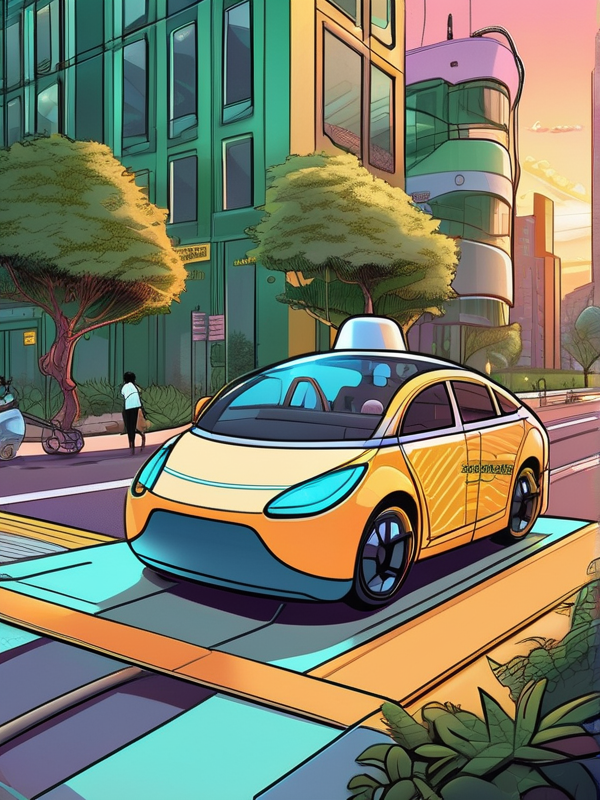
Introducing Tesla’s Cybercab: A Leap into Autonomous Ridesharing 🚗🤖
Tesla has taken a bold step in the self-driving revolution with the unveiling of the Cybercab robotaxi. Announced by CEO Elon Musk at the “We, Robot” event, the Cybercab symbolizes Tesla’s vision of a future where transportation is not only autonomous but also significantly safer. With no steering wheels, gas pedals, or brake pedals, these two-door marvels are designed to operate entirely without human intervention. Musk claims that Cybercabs will be “10 times safer than a human,” highlighting the potential for drastically reducing traffic accidents caused by human error. This innovation isn’t just about technology; it’s about reshaping how we think about urban mobility and personal transportation. By integrating advanced AI and Tesla’s proprietary software, Cybercab aims to set a new standard in the ridesharing industry, promising efficiency and safety in equal measure.
Strategic Rollout Plans: Targeting Key Markets with Precision 🎯🌍
Tesla plans to introduce the Cybercab robotaxi in major hubs like Texas and California starting next year, with mass production slated for 2026. These states are chosen for their progressive stance on autonomous vehicles and favorable regulatory environments, which can accelerate deployment and adoption. The initial rollout will likely involve extensive testing and mapping to ensure seamless operation in diverse urban landscapes. By 2026, production of Cybercabs will commence, positioning Tesla to compete directly with established players like Waymo. Additionally, Tesla intends to launch a dedicated ride-share app, mirroring platforms like Uber and Lyft, to facilitate easy access for consumers. The strategic choice of early adopters—Texas and California—not only provides a robust testing ground but also leverages the tech-savvy populations in these states. This phased approach allows Tesla to refine its technology and business model, ensuring scalability and reliability as demand grows.
Pricing Strategy: Affordable Autonomy for the Masses 💰🔧
Tesla is setting the stage for widespread adoption of autonomous vehicles by pricing the Cybercab under $30,000, significantly cheaper than the current Model 3 starting at over $42,000. This competitive pricing strategy aims to make self-driving technology accessible to a broader audience, addressing the demand for cost-effective electric vehicles. The affordability is further enhanced by the Cybercab containing about half the parts of the Model 3, likely reducing production costs and fostering a higher profit margin. Additionally, Musk estimates the per-mile cost for operating a robotaxi to be between 30 to 40 cents when deployed at scale. This low operational cost could translate into cheaper ride fares, making autonomous rideshare an attractive option for everyday commuters. To illustrate, consider the following cost breakdown based on a scaled deployment scenario:
| Cost Component | Per Mile Cost |
|---|---|
| Vehicles | $0.25 |
| Labor | $0.091 |
| Total Estimate | $0.392 |
This table highlights how Tesla’s Cybercab could achieve cost-efficiency through economies of scale and optimized operations, potentially undercutting competitors in the autonomous vehicle market.
Market Impact and Future Outlook: Navigating a Trillion-Dollar Opportunity 🌟📈
The global self-driving electric vehicle market is poised for exponential growth, projected to reach $5 trillion by 2031 with a CAGR of 36.3%. Tesla’s Cybercab is strategically positioned to capture a significant share of this burgeoning market. Analysts, like Daniel Ives from Wedbush Securities, recognize a trillion-dollar opportunity for Tesla in self-driving electric vehicles, driven by the demand for low-emission and safe transportation. Tesla’s approach leverages existing models with advanced driver assistance software, facilitating faster and more affordable production. Moreover, the integration of Cybercabs into ride-sharing services can disrupt traditional transportation models, offering economic and environmental benefits. The emphasis on reducing greenhouse gas emissions and enhancing traffic safety aligns with global sustainability goals, further boosting market appeal. However, challenges remain, including regulatory approvals and competition from companies like Waymo, which utilize a more comprehensive sensor suite. Nonetheless, Tesla’s innovative pricing and strategic rollout underscore its potential to lead the autonomous vehicle revolution, setting the stage for a smarter, greener, and more connected future.
As Tesla navigates the complexities of introducing the Cybercab, its success could redefine urban mobility. By making autonomous rides affordable and accessible, Tesla is not just launching a new product but pioneering a shift towards a more efficient and sustainable transportation ecosystem. The journey ahead involves balancing technological advancements with practical implementation, but the potential rewards position Tesla as a formidable leader in the next wave of automotive innovation.


 No bad stock